What is a Portafilter and Why Does Its Basket Size Matter?
You see it in every coffee shop: the handled thingamajig the barista locks into the espresso machine. It’s called a portafilter, and it’s not just a fancy handle—it’s the heart of the entire espresso brewing process.
For home baristas, understanding your portafilter is the first step toward pulling consistently amazing shots. The type of basket it holds and, most importantly, the size of that basket, dictates everything from your coffee dose to your extraction quality.
Let’s demystify this crucial tool.
What Exactly Is a Portafilter?
A portafilter (Italian for “filter holder”) is the device that holds the ground coffee and attaches to the group head of your espresso machine. Its job is to create a sealed chamber where hot, pressurized water is forced through the compacted coffee grounds to produce espresso.
It has three main parts:
- The Handle: What you hold to lock it in and remove it.
- The Basket: The removable, perforated cup that holds the coffee grounds.
- The Spouts: One or two outlets where the brewed espresso flows into your cup.
The Basket: The Most Important Part
The basket is where the magic happens. They come in two main types, and choosing the right one is critical.
1. Pressurized (Dual-Wall) Baskets
- How they work: These baskets have a second wall with a single small hole. They create pressure artificially by forcing the espresso through that tiny exit. The coffee puck itself provides little resistance.
- Who it’s for: Absolute beginners. They are extremely forgiving of grind size, tamping pressure, and coffee freshness. If you have a beginner-friendly machine, it likely came with this basket.
- The downside: They produce a thinner, more generic-tasting crema and severely limit your ability to control extraction and taste. It’s training wheels for espresso.
2. Non-Pressurized (Single-Wall) Baskets
- How they work: These have many small holes in a single wall. The pressure is created naturally by the resistance of the coffee puck itself—specifically, by using a fine grind and a proper tamp.
- Who it’s for: Anyone serious about espresso. This is what all commercial cafes and experienced home baristas use. It gives you full control over the extraction, allowing you to dial in for maximum flavor.
- The upside: They are capable of producing rich, complex, and authentic espresso with beautiful crema. This is where the real art of espresso begins.
The Upgrade Tip: If your machine came with a pressurized basket, buying a non-pressurized basket is the cheapest and most effective upgrade you can make to improve your espresso quality.
Why Basket Size Matters Most
This is the secret key that many beginners miss. Baskets are not one-size-fits-all; they are sized by how many grams of coffee they are designed to hold.
The most common sizes are:
- Single Shot: Designed for 7-9 grams of coffee. (Rarely used nowadays).
- Double Shot: The industry standard. Designed for 16-22 grams of coffee.
- Triple Shot: Designed for 21-24+ grams of coffee.
Why does this matter so much? The basket size tells you your dose—the amount of coffee you need to use.
- Under-dosing: If you put 14g of coffee in a basket designed for 18g, the puck will be too thin. Water will channel through it too quickly, causing a weak, sour, under-extracted shot.
- Over-dosing: If you stuff 22g into an 18g basket, the coffee puck will be too thick and touch the shower screen before you even start brewing. This prevents proper water distribution, leads to uneven extraction, and can damage your machine.
How to Find Your Basket’s Ideal Dose
- Look for the imprint: Many baskets have the recommended dose (e.g., “18g”) stamped or laser-etched on the bottom or side.
- The Coin Test:
- Place your empty basket in the dry portafilter.
- Dose in your coffee and tamp as you normally would.
- Place a flat coin (like a US dime or quarter) on top of the coffee puck.
- Lock the portafilter into the machine and then remove it immediately.
- Check the coin. If it has a deep impression from the shower screen, your dose is too high. If it has no imprint at all, your dose might be too low. A light imprint is perfect.
The Bottom Line
Your portafilter is far more than a handle. It’s the crucible where espresso is born. The basket you choose and the dose you use within it are the foundational first steps to a great shot.
Your Action Plan:
- Identify if you’re using a pressurized or non-pressurized basket.
- Find the recommended dose for your specific basket.
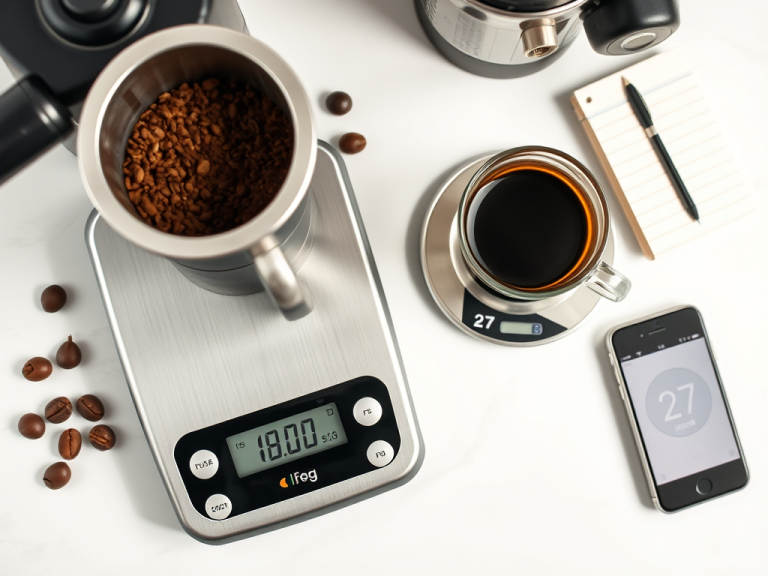
- Use a scale to dose that amount precisely every time.
Master this, and you’ve already solved half of the most common espresso problems before you even turn on your machine.