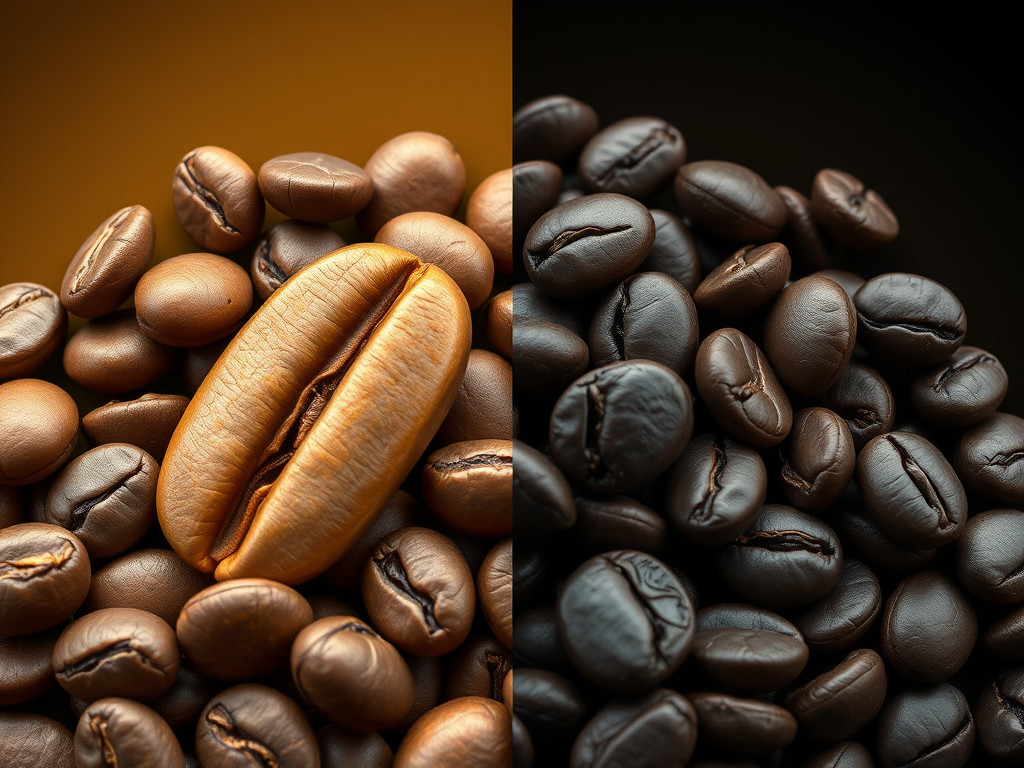
The Dirty Secret of Dark Roast Coffee (Why Your Espresso Tastes Bitter)
Walk into any supermarket, and you’ll see them: bags of coffee beans stained nearly black, labeled “Espresso Roast” or “Italian Roast.” The packaging promises a “bold,” “strong,” and “intense” flavor. It feels right. Espresso should be strong, shouldn’t it?
I’m here to let you in on a secret the specialty coffee world has known for years: You’ve been lied to.
That dark roast isn’t the key to great espresso—it’s often the reason your shots taste ashy, bitter, and hollow. It’s a cover-up, not a feature.
The truth is, the best espresso often comes from a roast level that might surprise you. Let’s expose the myth and unlock the path to a truly incredible shot.
The Great Lie: “Dark Roast = Espresso Roast”
The association between dark roast and espresso is a historical accident, not a rule of quality. Here’s how it happened:
- Hiding Low-Quality Beans: In the past, the beans available for mass production weren’t always the best. Roasters discovered that by burning the beans to a dark, oily shine, they could create a uniform, “bold” flavor that masked defects, inconsistencies, and stale beans. The char became the flavor.
- The “Strong” Misconception: The bitter, powerful punch of a dark roast was marketed as “strength.” Consumers learned to associate that harsh, smoky taste with what espresso is supposed to taste like.
But here’s the secret they don’t want you to know: A great espresso shot shouldn’t just be strong. It should be complex, sweet, and balanced.
Why Your Dark Roast Espresso Tastes Bitter
The roasting process is a series of chemical reactions. The longer and hotter you roast, the more you lose:
- It Burns Away the Sugar: The natural sugars in the coffee bean caramelize and then eventually carbonize. Once you go past a certain roast level, you’re not tasting caramel—you’re tasting ash.
- It Masks Origin Character: The beautiful, unique flavors of a coffee bean—the fruity notes of an Ethiopian, the chocolatey depth of a Guatemalan, the nutty sweetness of a Brazilian—are all roasted out. The only flavor left is the taste of the roast itself: generic bitterness.
- It Creates Oily, Stale Beans: Those shiny, oily surfaces on dark roast beans are a sign they’ve been roasted far past the point where their delicate compounds are stable. Those oils go rancid incredibly quickly, meaning your coffee is stale almost immediately after roasting.
The Real Secret to Sweeter Espresso: Lighter Roasts
This is the paradigm shift. The best espresso is increasingly being made with high-quality light to medium roast beans.
Why?
- You Taste the Bean, Not the Burn: Lighter roasts preserve the bean’s inherent sugars and complex flavor notes. You get a shot that can be naturally sweet, fruity, floral, or chocolaty—without any added sugar.
- Better Crema: The sugars and oils that create a stable, beautiful, hazelnut-colored crema are still intact in a lighter roast.
- It’s Actually Harder to Do: Extracting a light roast well requires a good grinder and proper technique. This is why many cafes default to dark roasts—it’s more forgiving of low-quality equipment and inconsistent skill. You, as a home barista, can do better.
How to Ditch the Dark Roast Trap
- Ignore the “Espresso Roast” Label: Stop buying beans based on this misleading term.
- Look for a “Roast Date,” Not a “Best By Date: Buy beans roasted within the past 2-3 weeks. Freshness is everything.
- Read the Description, Not the Name: Look for flavor notes you find appealing—“chocolate,” “caramel,” “berry,” “nutty.” These are signs of a roaster focused on flavor, not just roast level.
- Start with a Medium Roast: This is the perfect sweet spot. It offers more developed sweetness and body than a light roast but retains far more character than a dark roast. It’s the most forgiving for beginners looking to break the dark roast cycle.
The Bottom Line: Strength is Balance, Not Bitterness
True strength in espresso isn’t about a overpowering, bitter punch. It’s about the strength of flavor—a robust, complex, and sweet profile that stands up to milk in a latte or shines on its own as a shot.
Don’t let a decades-old marketing gimmick hold your espresso hostage. Step out of the dark and into the light. Your taste buds will thank you.
Ready to experiment but not sure where to start? [We’ve tested and compiled a list of the best medium roast beans that are perfect for pulling sweet, complex shots at home]how to choose coffee beans