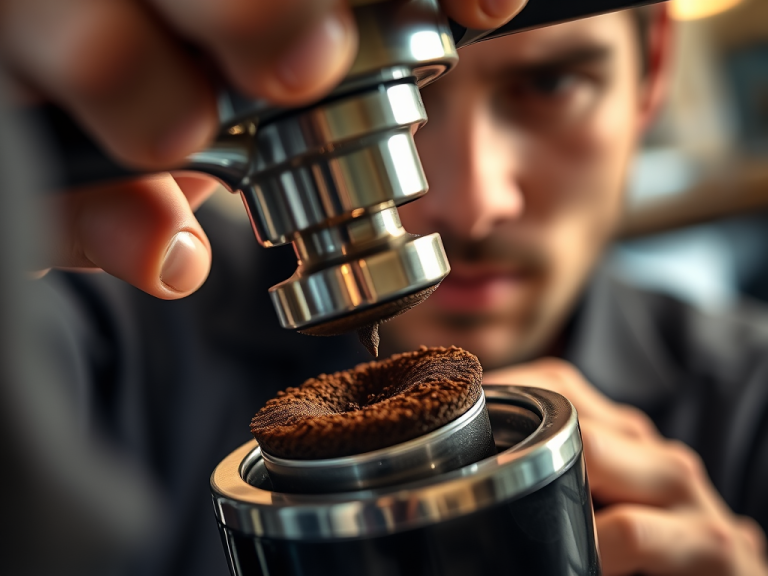
I Tried the “Paper Clip Trick” for Espresso – The Results Shocked Me
I have a confession. For months, my espresso was… fine. It was drinkable. But it was always missing that certain something—that thick, hazelnut-colored crema and complex, sweet flavor you get from a perfect café shot.
I assumed the problem was my mid-range machine. Or maybe my grinder wasn’t fancy enough. I was mentally preparing to drop another hundred bucks on a fancy “WDT tool” I’d seen all the coffee geeks online using.
Then, a professional barista friend dropped a bombshell. “Just use a paper clip,” he said.
I laughed. I thought he was messing with me. A paper clip? The same thing I use to hold together my tax documents?
Turns out, he was dead serious. And after trying it, I’ll never make espresso without one again. Let me show you why.
The Problem: Channeling and Clumpy Coffee
The enemy of great espresso is channeling. This is when high-pressure water finds a weak spot in your coffee puck and blasts straight through it, instead of seeping evenly through all the grounds.
The result? A shot that’s both bitter (from the over-extracted coffee in the channel) and sour (from the under-extracted coffee everywhere else). A confusing, terrible mess.
The main cause of channeling? Clumpy coffee grounds. When you grind coffee, it creates static and causes the fine particles to stick together in little lumps. When you tamp, these clumps create uneven density and invisible pathways for water to escape.
The Expensive “Solution”: The WDT Tool
The coffee world’s answer to this is a WDT (Weiss Distribution Technique) tool. It’s a simple device with thin needles you use to stir the coffee grounds in the portafilter to break up clumps before tamping.
They work incredibly well. They also cost anywhere from $25 to over $100 for a fancy, weighted, spinning base version.
I was about to click “add to cart” when I got the advice that changed everything.
The Paper Clip Trick: A 2-Cent Miracle
“The needles are all that matter,” my friend said. “Just use an unbent paper clip. It does the exact same thing.”
Skeptical but desperate, I rummaged through my desk drawer. I found a standard, metal paper clip and unbent it into a long, skinny wire with a little hook at the end.
Here’s how you do it:
- Grind your coffee directly into your portafilter as usual.
- Take your unbent paper clip and gently swirl it through the coffee grounds. You’re not mixing vigorously, just lightly raking through to break up any large clumps and distribute the grounds evenly.
- Tap the portafilter on the counter to settle the grounds.
- Tamp and pull your shot as you normally would.
The whole process adds about 5 seconds to your routine.
The “Shocking” Results: My Before and After
I decided to put it to a real test. I pulled two shots back-to-back with the same beans, same grind size, same dose, and same machine.
- Shot #1 (Without Paper Clip): The usual. It blonded early, around 18 seconds. The stream was uneven and sometimes spurted. The taste was fine, but a bit hollow and slightly bitter.
- Shot #2 (WITH The Paper Clip): I audibly said “whoa.” The espresso flowed out like a steady, syrupy, mouse tail. It was a beautiful dark amber for a full 28 seconds before slowly lightening. The crema was thick and persistent.
The taste test was the real shocker. The paper clip shot was noticeably sweeter, smoother, and more balanced. The harsh, bitter notes were gone. It was like I’d upgraded my grinder without spending a dime.
Why This 2-Cent Hack Beats a $100 Tool
It works for one simple reason: it effectively breaks up clumps. That’s it. The fancy tools look cool, but their core function is no different from a simple wire.
By ensuring your coffee grounds are evenly distributed and clump-free, you create a uniform puck that offers even resistance to water. This means every particle of coffee gets extracted equally, leading to a shot that is perfectly balanced—not a mix of bitter and sour.
Your Upgrade Awaits in a Desk Drawer
You don’t need to spend a fortune to make astronomically better espresso. You just need to understand the problem and apply a little clever ingenuity.
So before you impulse-buy that next coffee gadget, try the paper clip trick. It’s the cheapest and most effective upgrade you’ll ever make to your coffee game.
Your results might just shock you, too.
Of course, even the best technique can’t fix a bad grind. If you’re still struggling, [the problem might be your hardware. Here’s our list of grinders that create consistently even grounds right from the start]The Best Espresso Grinders for Beginners in 2025 (No BS Guide)